





|
|
|
|
|
|
|
|
Charles N. Flagg Matthew Learn Jack McSweeney Lucas Merlo Tom Wilson School of Marine and Atmospheric Sciences Stony Brook University Stony Brook, NY 11794-5000 |
The Great South Bay Project |
The goal of the Great South Bay program is to gain a thorough understanding of the biogeochemistry of the Bay and its effect on pelagic and benthic communities. Currently this effort is supported by the NY Department of State in which observations and models are combined in support of the development of an ecosystem based management approach to address the ecological problems besetting the Bay. This webpage shows some of the hydrodynamic model results to date and presents physical observational data collected over the past several years. Currently, the hydrodynamic model is undergoing a major upgrade so as to deal more effectively with the complex topography of the western portions of the Bay. The model results presented below deal with one aspect of the Bay, that is the potential impact of a large breach in Fire Island. The model is also being used to study the impact of tides and winds on the distribution and dispersal of passive tracers and plankton. This page also presents much of the observational data from temperature and salinity sensors that have been deployed around the eastern portion of the Bay since 2004. Since 2010 some of these instruments have been enhanced to measure sea level, chlorophyll and turbidity. And since the middle of 2010 real-time data from the Smith Point bridge and a telemetering buoy south of Sayville have also become available. All the observational data are available below.
Read the reports and view the images of the Hurricane Sandy and breaches at Old Inlet, Coast Guard Cut, and Moriches Inlet.
Go to the real time data from the Bellport dock.
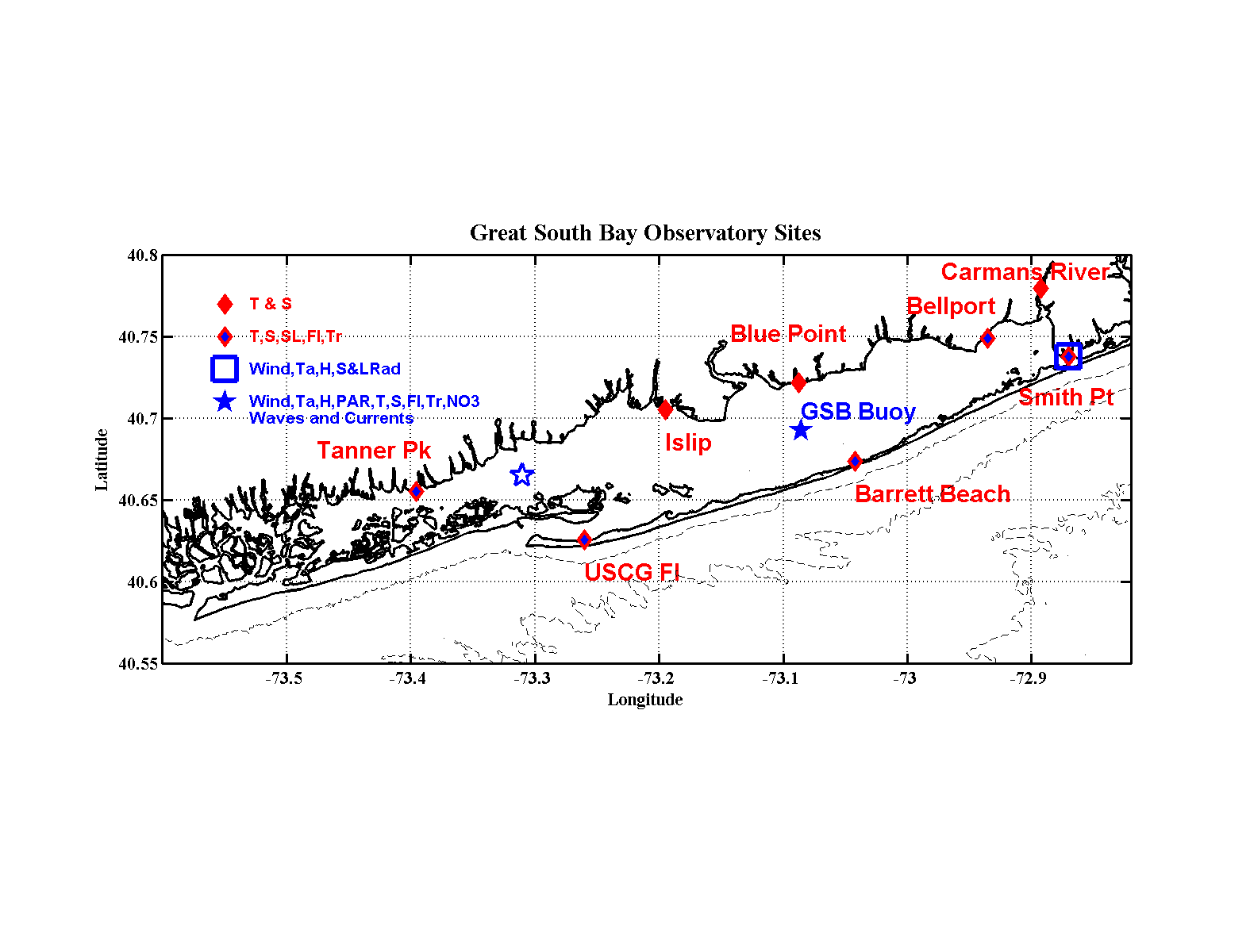
Location of Observatory Components |
 |
|
Data are being collected from eight stations on the Great South Bay using SeaCat instruments measuring temperature and salinity. The stations include, from east to west on the north shore: Smith Point, Bellport, Blue Point, Islip and Tanner Park, and the US Coast Guard Station and Barrett Beach on Fire Island. The instruments are deployed for as much as three months at a time, less in the summer due to heavy biofouling. |
SBE 16
SeaCat SBE 16 Plus SeaCat with WetLabs FLNTUS 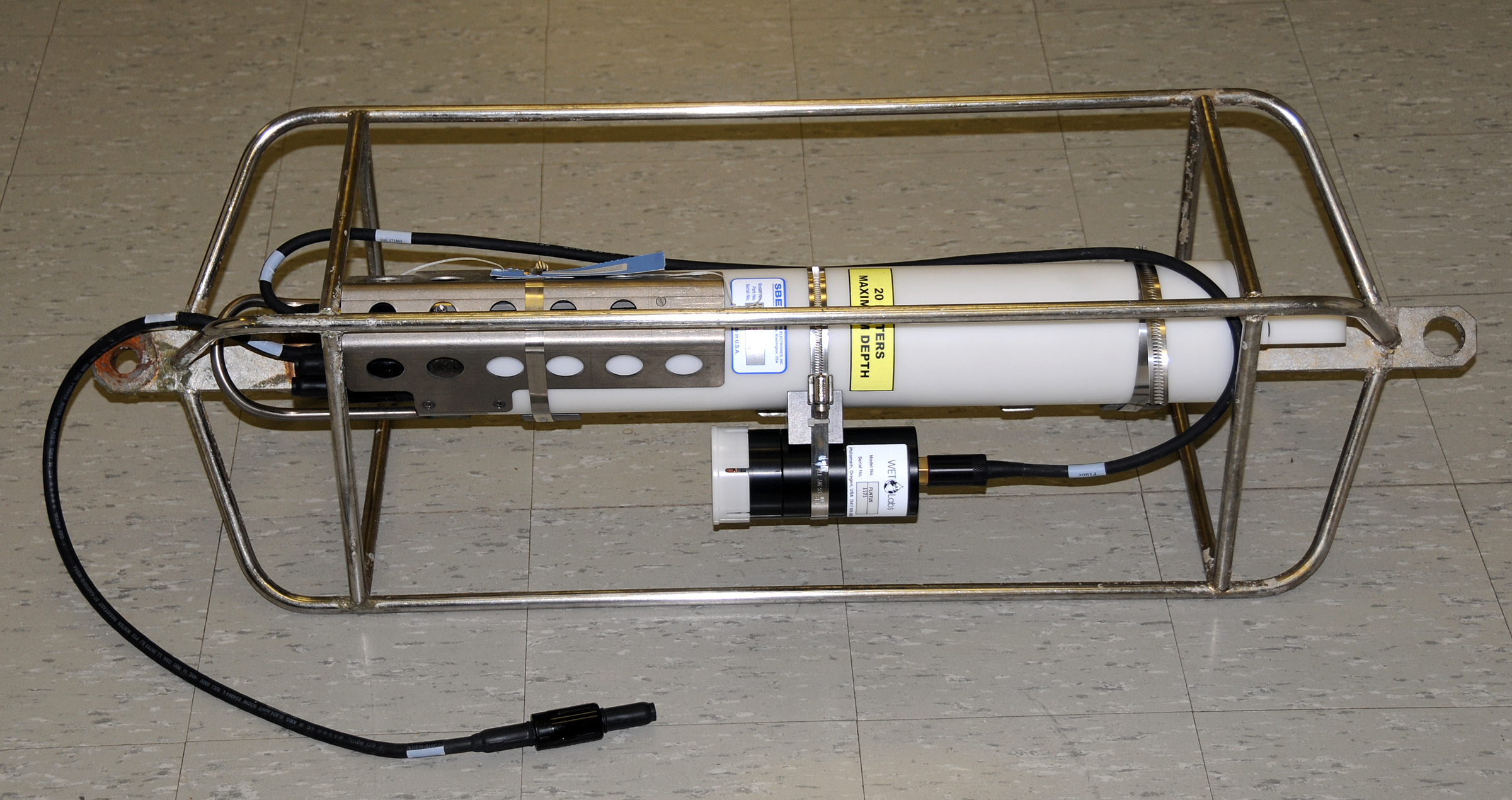 |
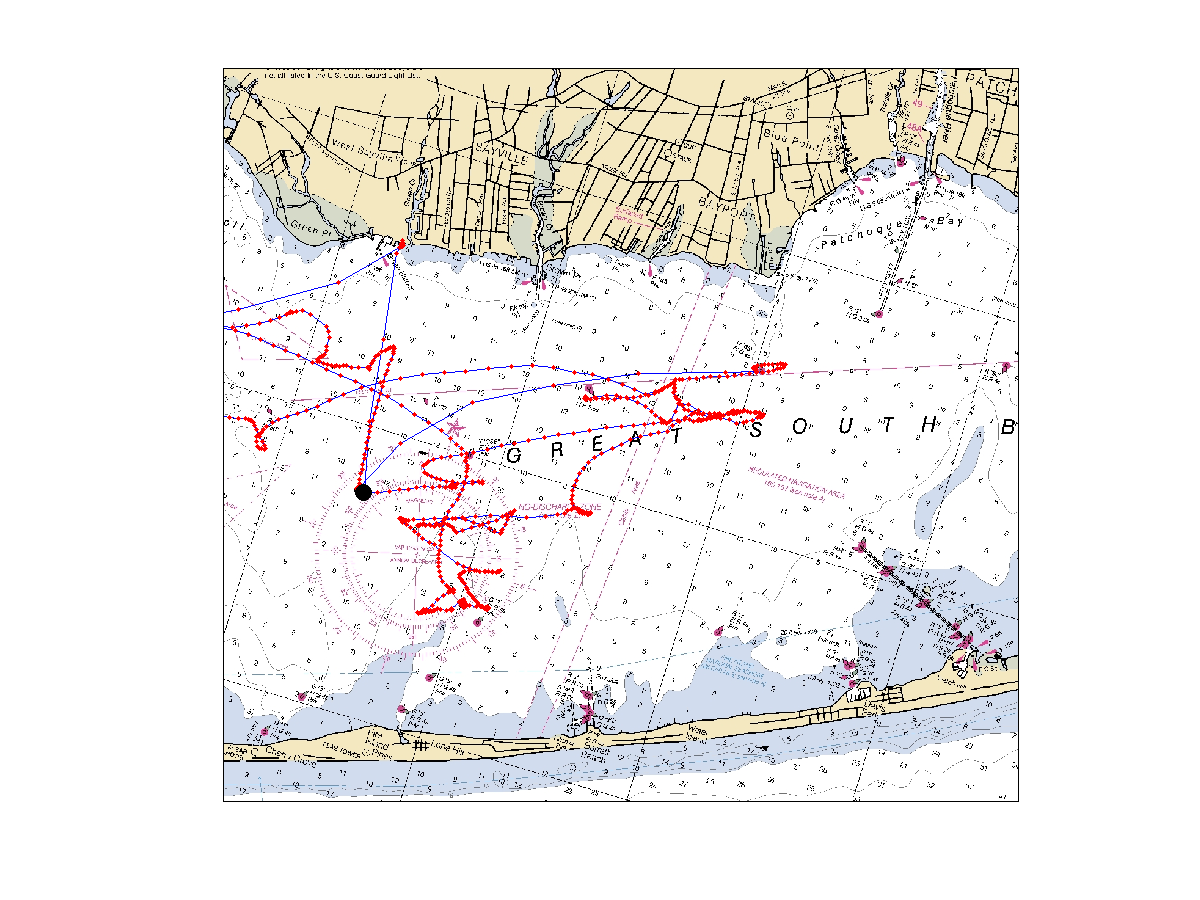
Real-Time DataIn addition to the delayed-mode SeaCat data, meteorological data are being collected from the south tower of the Smith Point bridge and these data are available in real time below. That data includes temperature and salinity from the Smith Point SeaCat, short and long wave radiation from Eppley pyronometers, and wind speed, wind direction, air temperature, humidity, barometric pressure and rainfall rate from a Vaisala WXT520. On October 6th, 2010 we deployed GSB #1 buoy south of Sayville at 40o 41.6'N, 73o 05.1'W. This buoy reports wind speed and direction, air temperature and humidity, photosynthetically active radiation (PAR), water temperature and salinity, chlorophyll-a fluorescence and turbidity. On December 29, 2010 ice forming in the Bay carried the buoy quite a ways as the ice sheets broke up and started to move around. The ice finally released the buoy south of Islip in mid-February at which time we towed the buoy to the West Sayville Marina on February 17th. After checking on the systems and repainting, the buoy was towed out and re-anchored near its original location, 40 41.552 N, 73 5.144 W, on March 23, 2011. The winter of 2011-2012 was particularly mild and we did not have any trouble with ice flows but significant ice build up in January 2013 captured the buoy again and dragged it first south and then some two miles west. It will be returned to its proper location as soon as possible. |
Great South Bay Buoy #1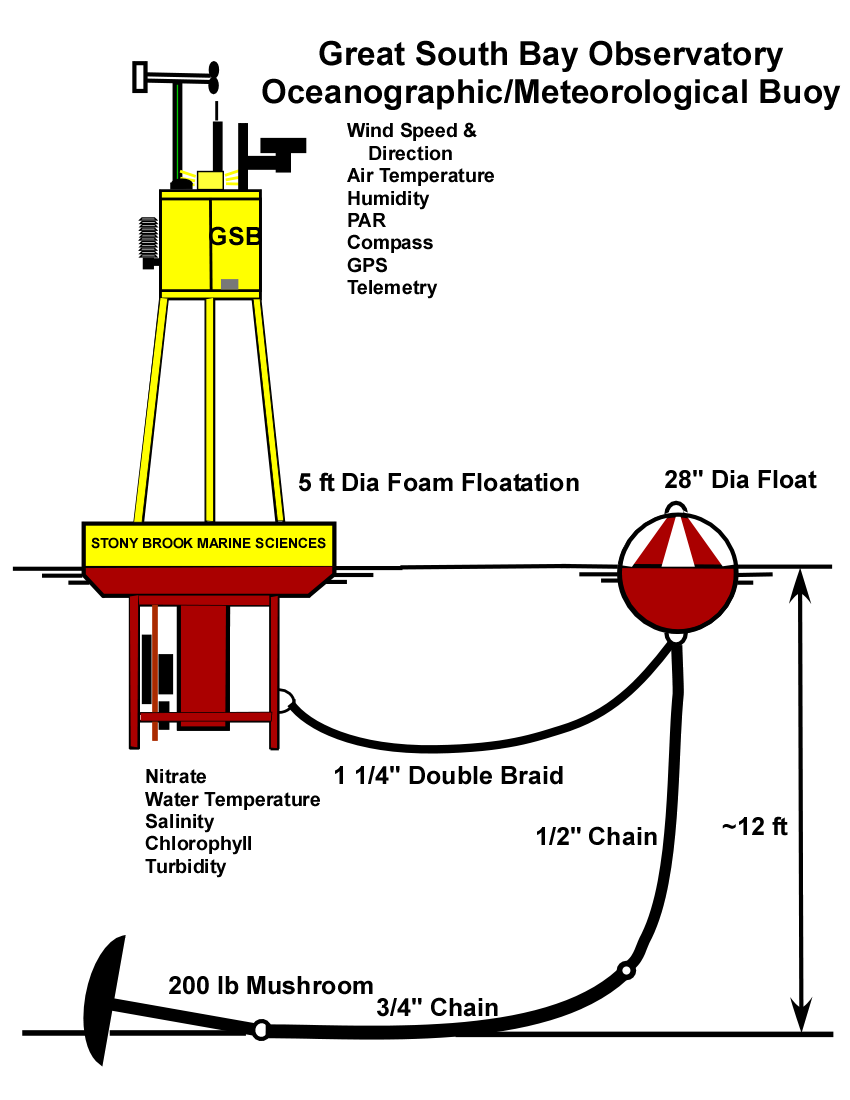 |
2011 Buoy Movement Due to Ice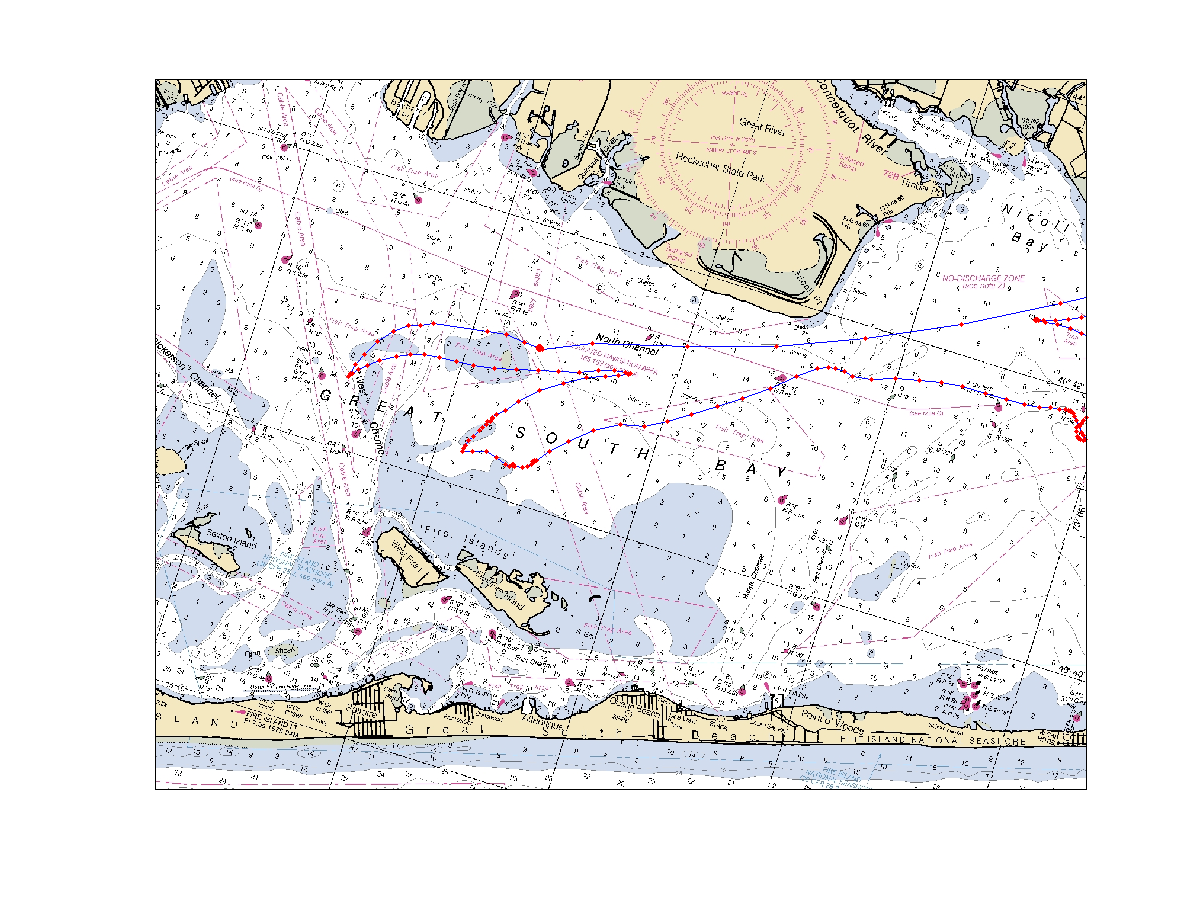
 |
2013 Buoy Track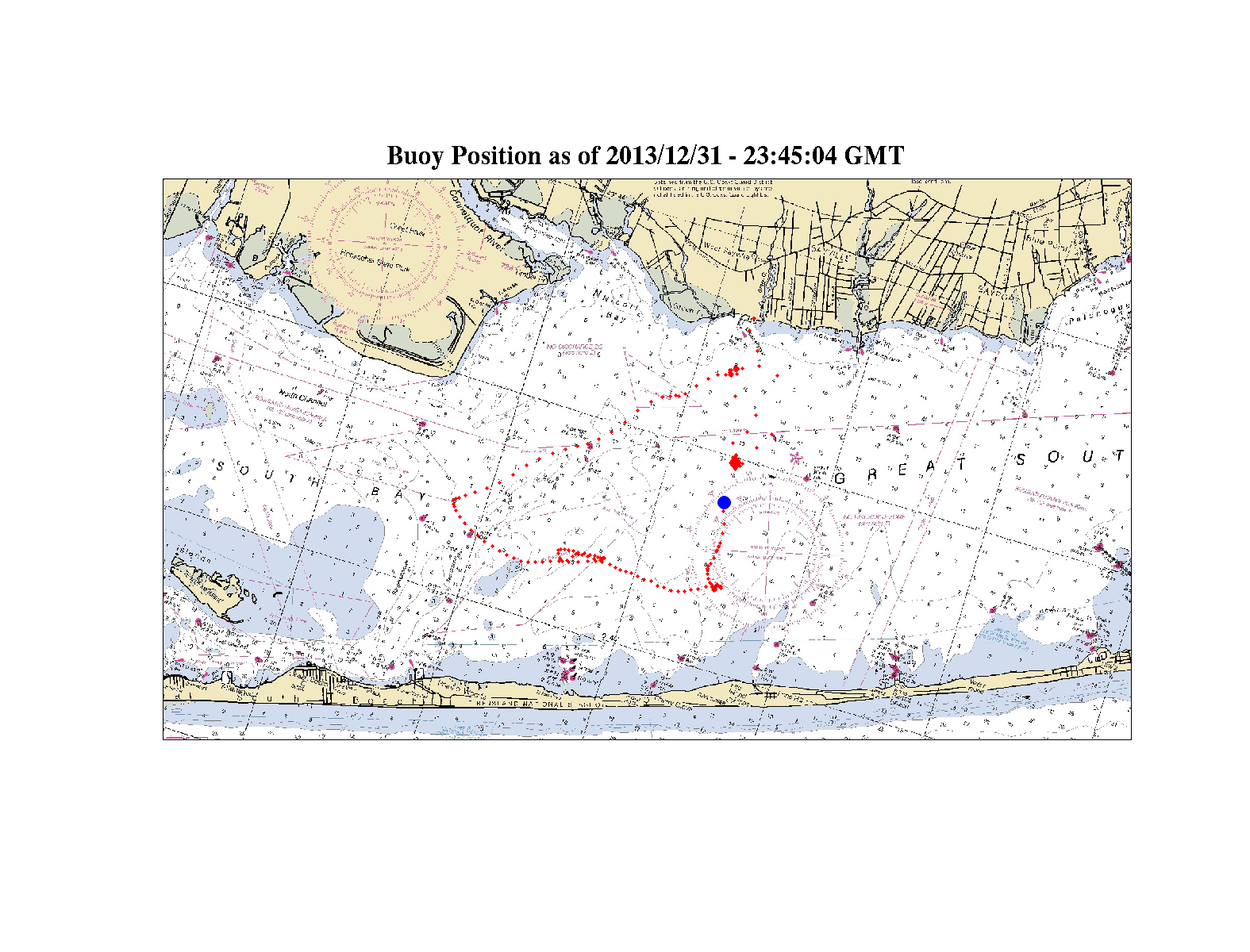 |
Current Buoy Position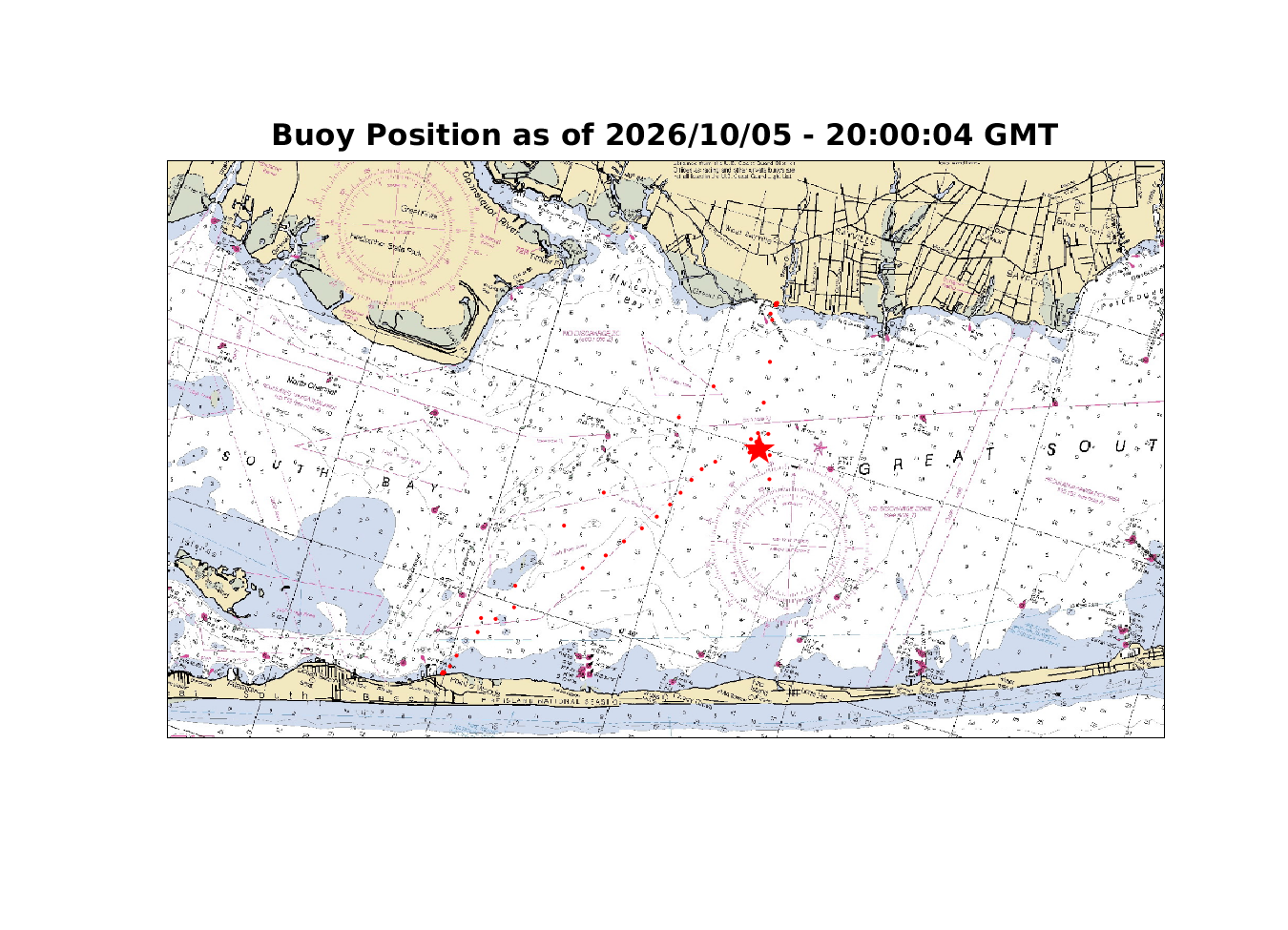 |
| Smith Point Bridge | GSB Buoy #1 south of Sayville | Bellport Marina | |||||||||||||||
|
Buoy #1 data: Wind, Air Temp, Humidity, PAR, Water Temp, Salinity, Chlorophyll-a and Turbidity Hour-Averaged Data Files: |
Plot of Bellport data for the past 60 days 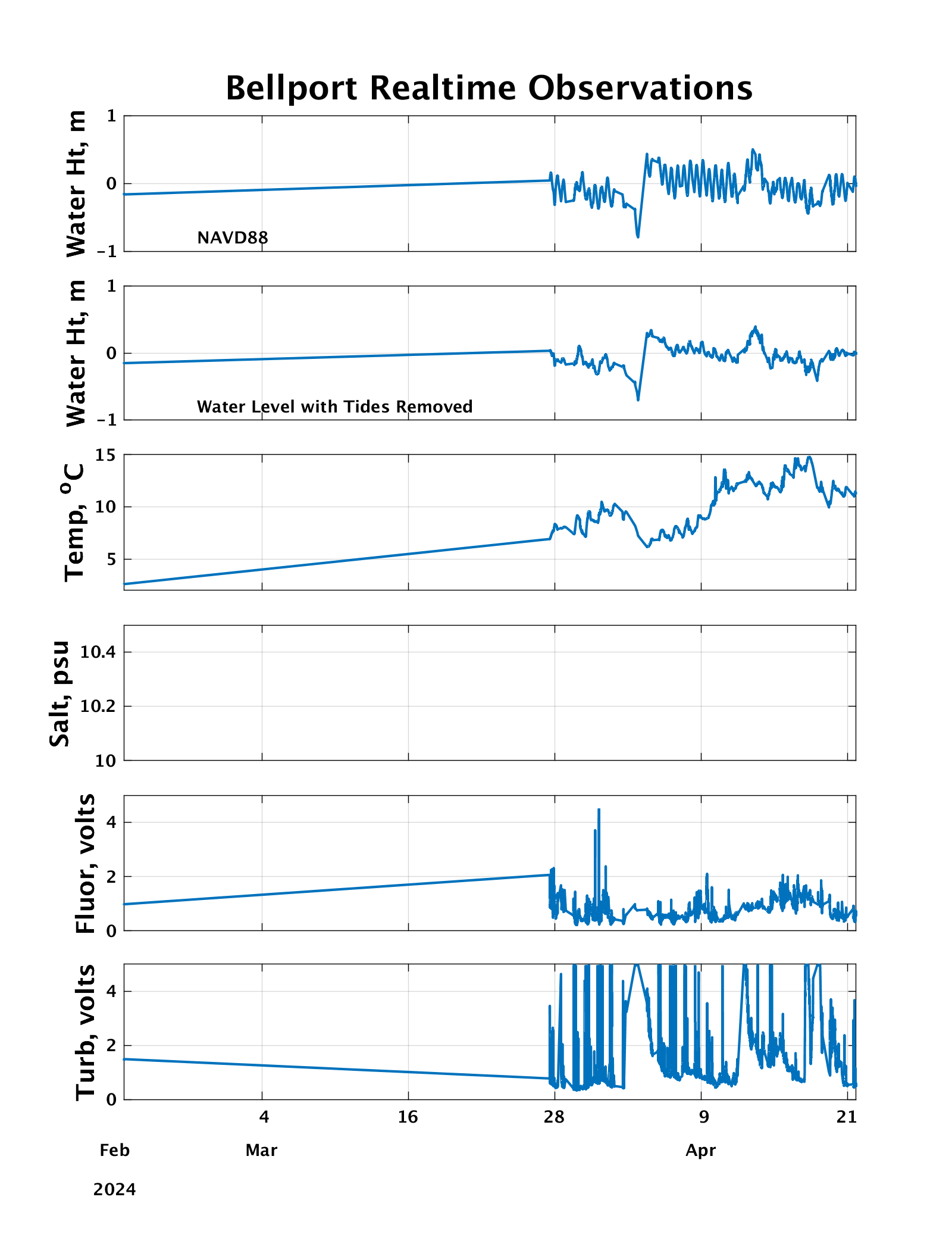 Averaged Data Files:
The plot and data file include NAVD88 water level, detided water level, temperature, salinity, fluorescence and turbidity. The real time sensor is located at the end of the marina dock. |
|
||||||||||||||
Note: All times and dates are in Greenwich Mean Time (GMT).
Bellport |
Blue Point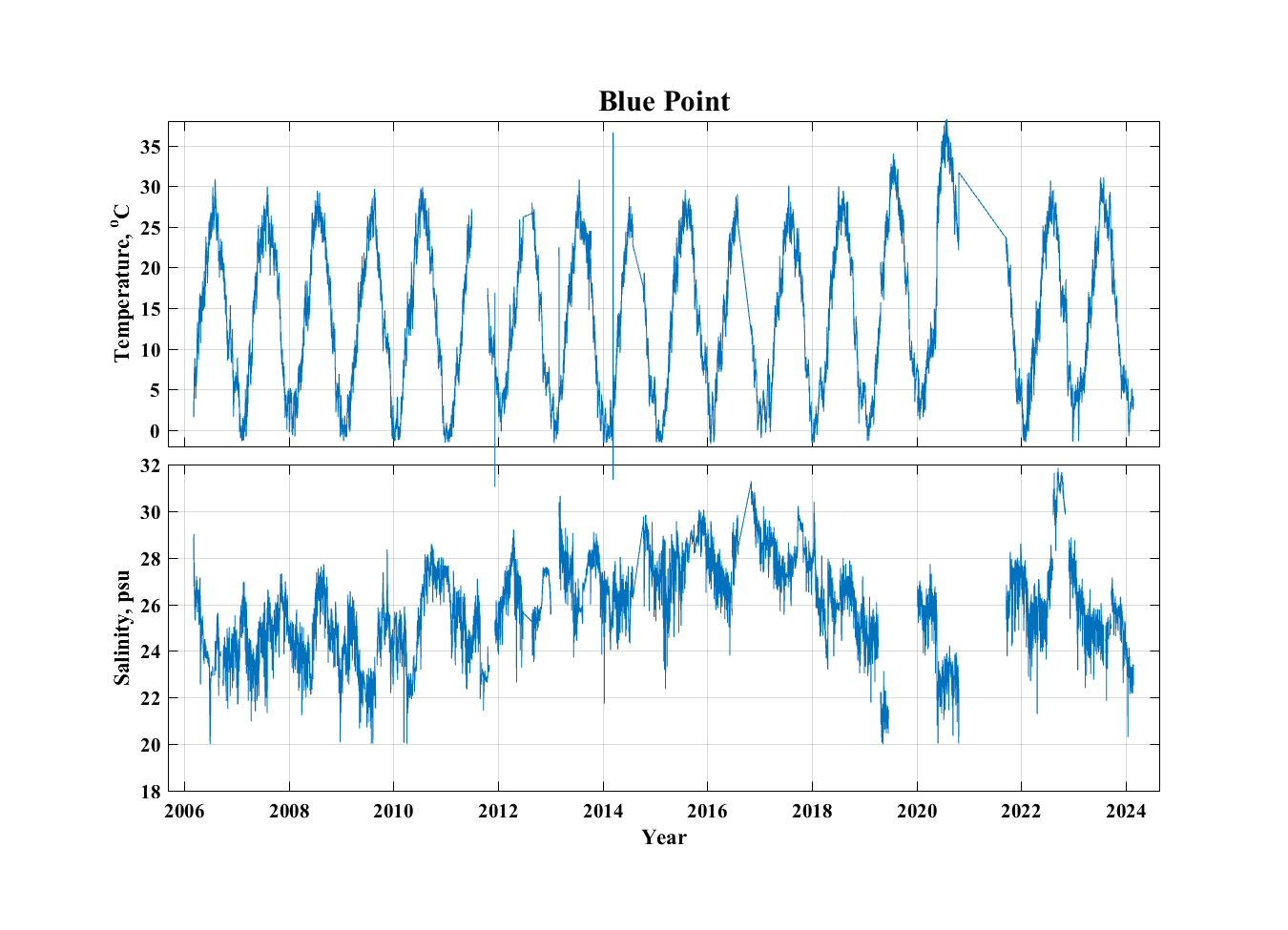 |
Islip Hatch/Fish Pier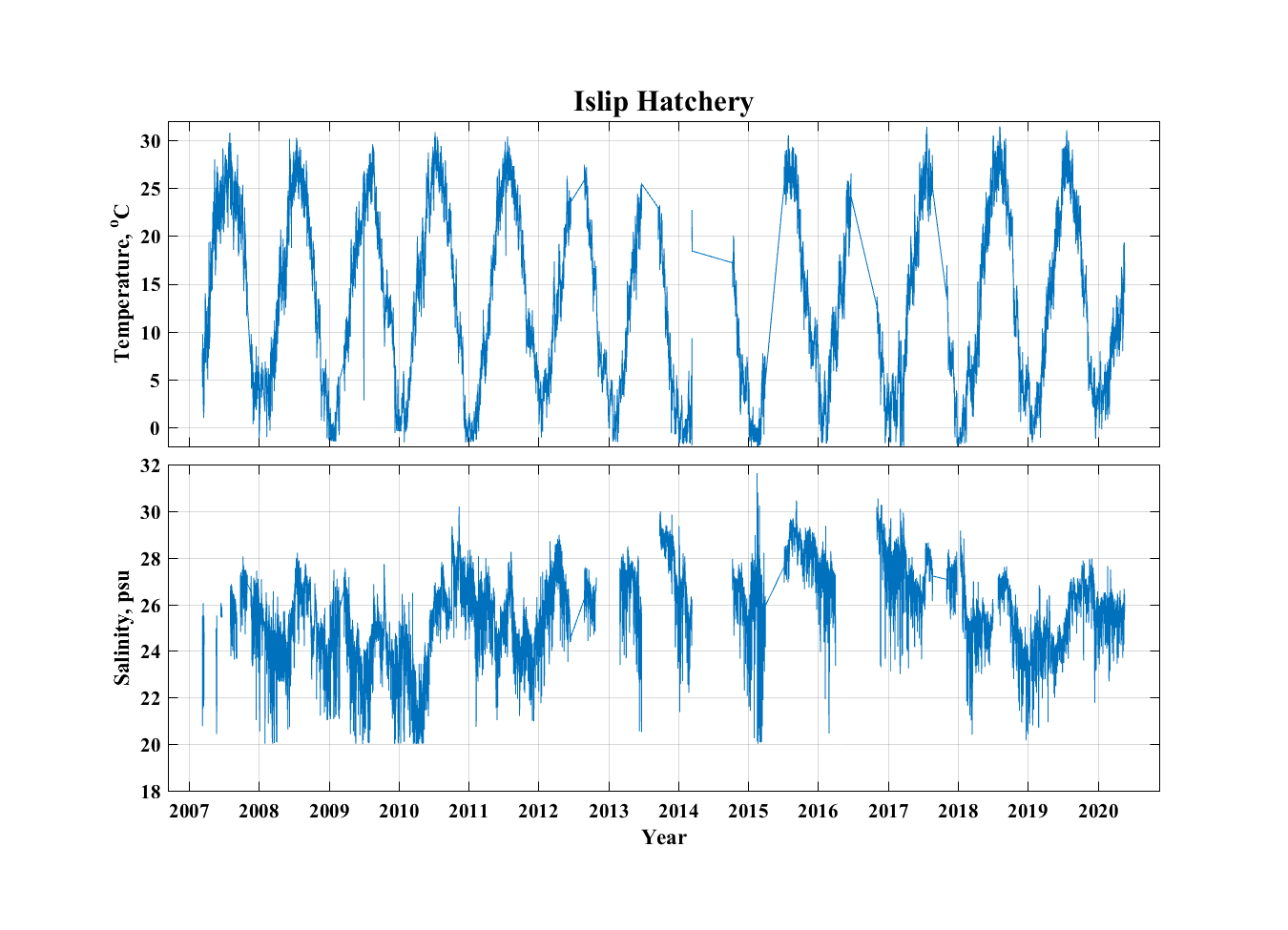 |
Tanner Park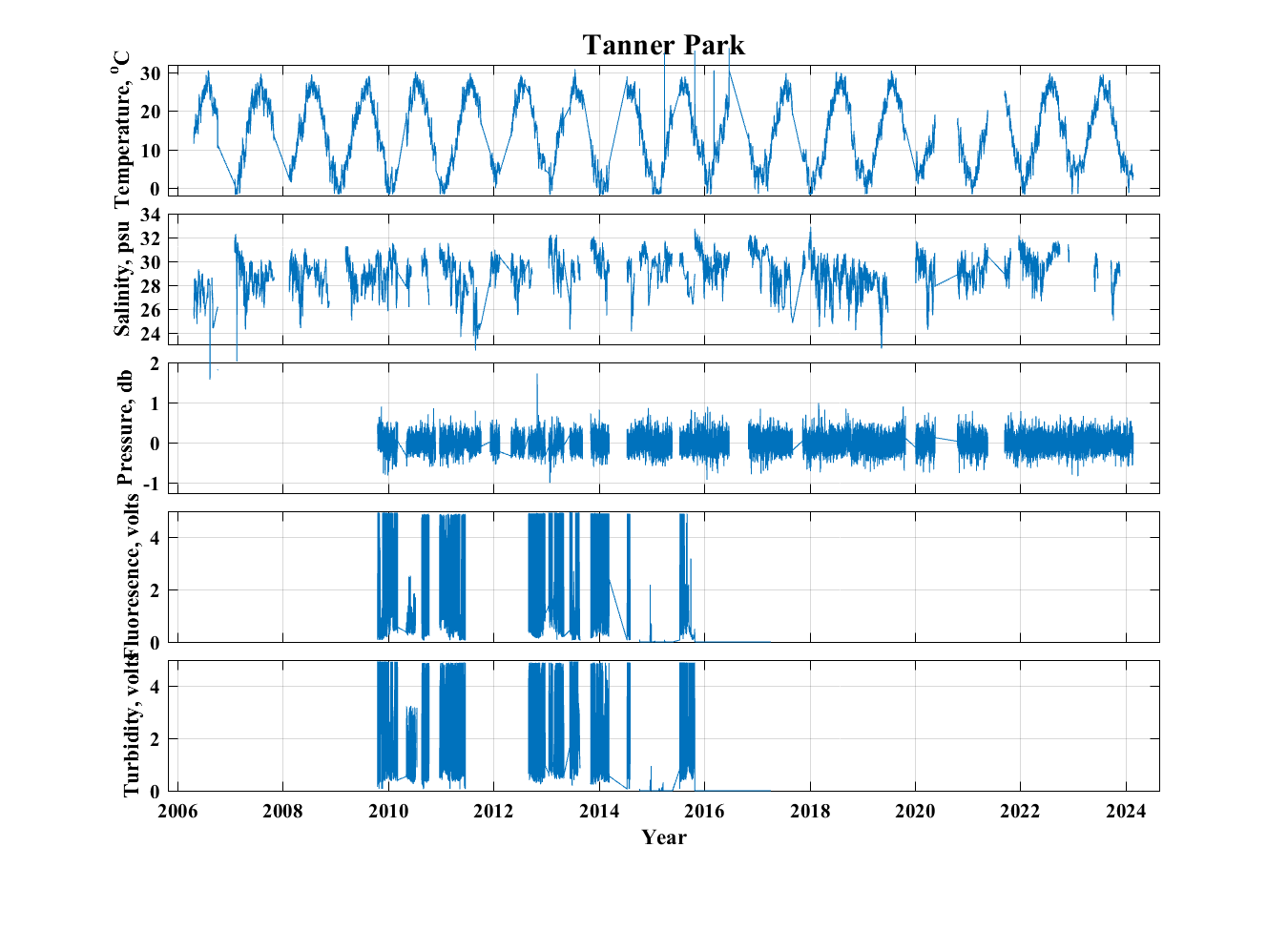 |
Smith Point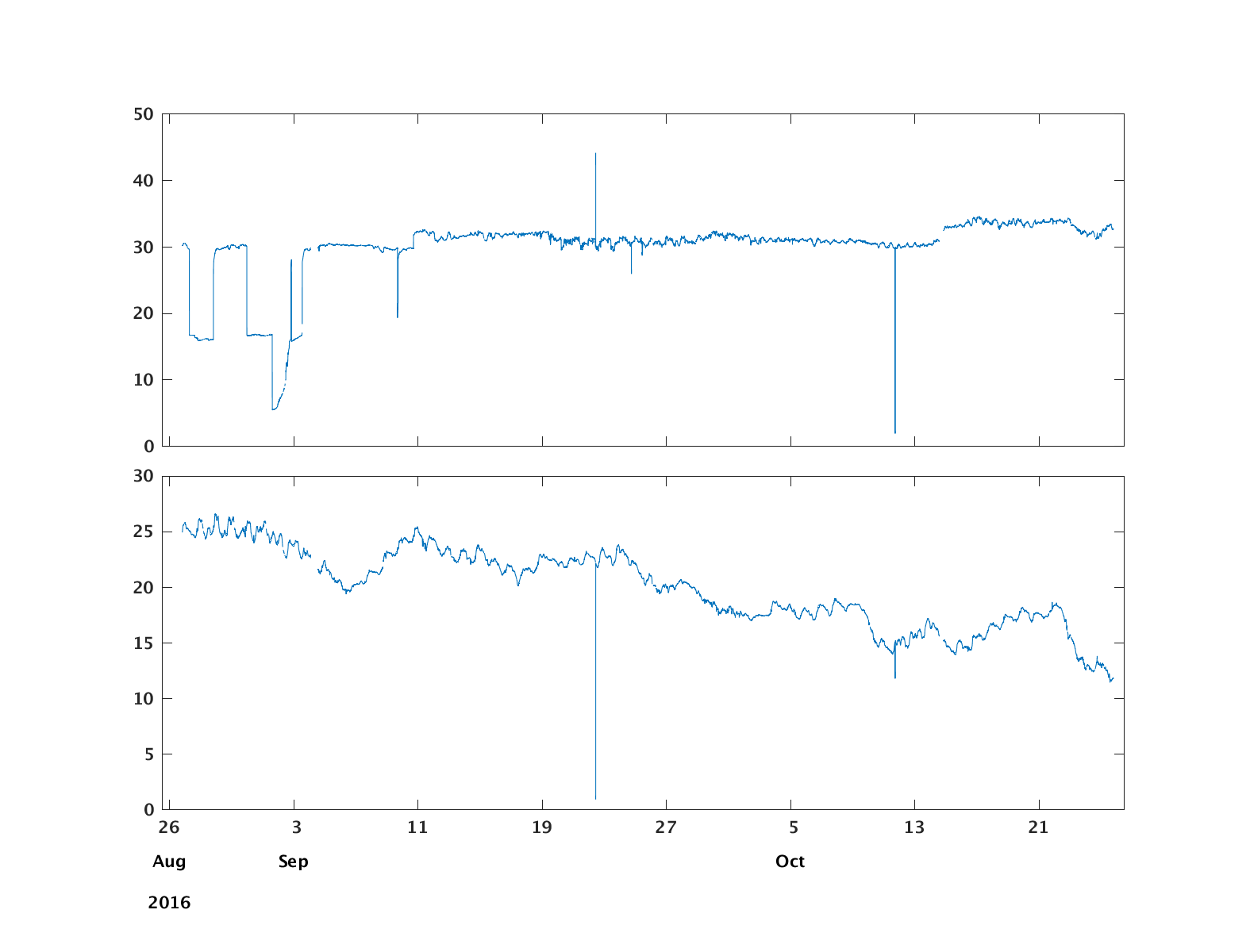 |
USCG Fire Island Inlet |
Barrett Beach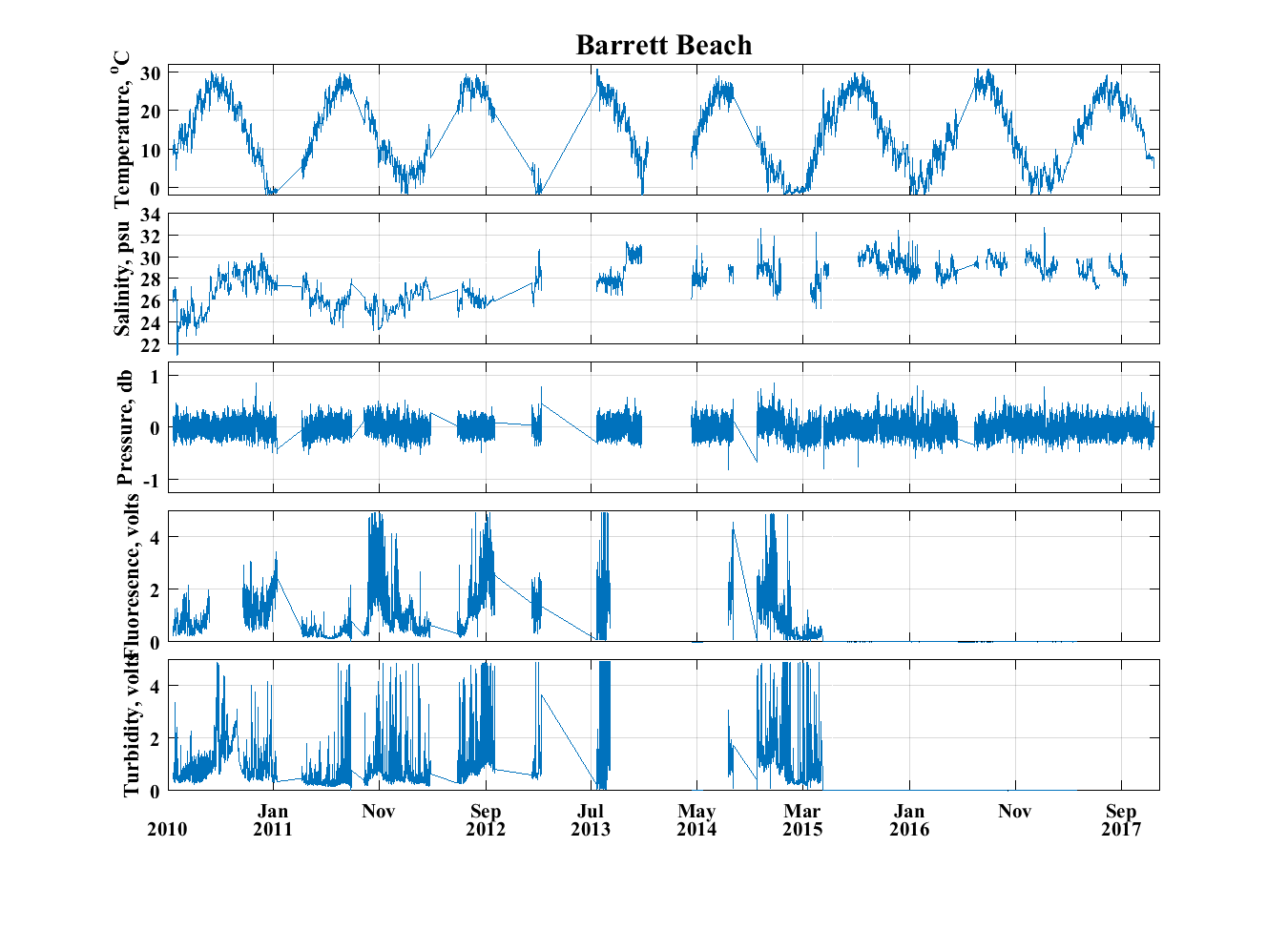 |
Carmans River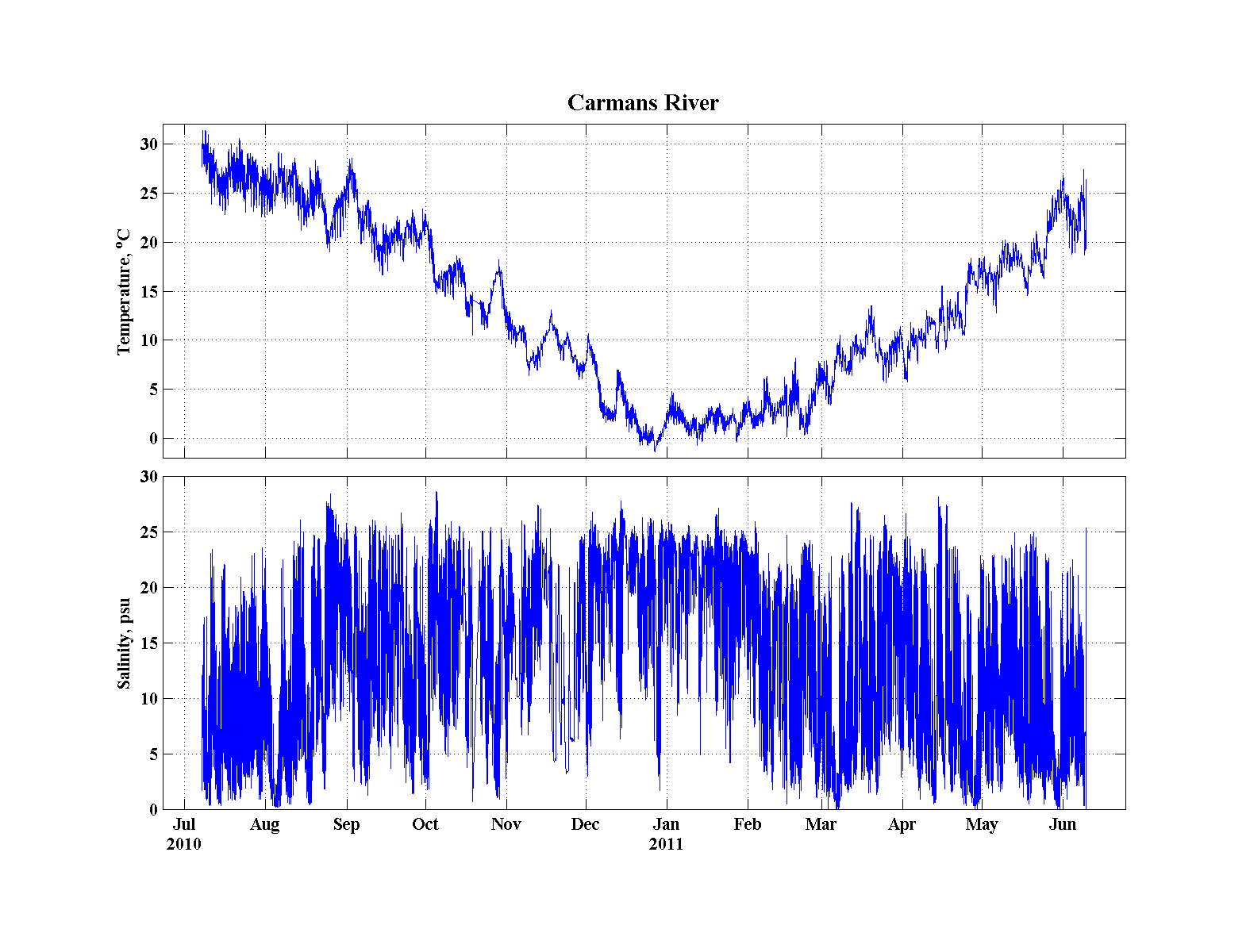 |
Watch Hill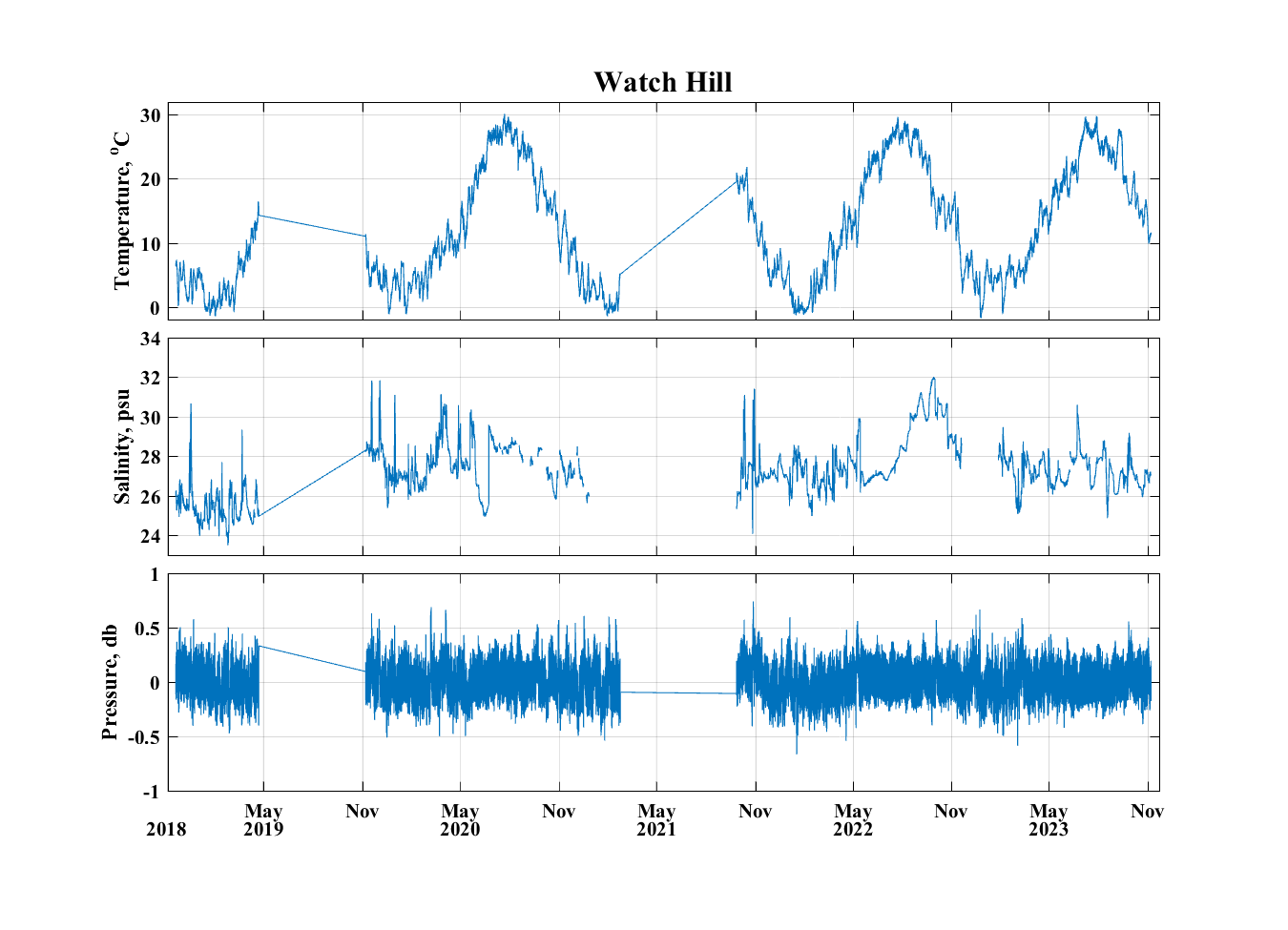 |
Click on the sites listed below to see the plots of the individual deployments for greater detail
To download the data for the entire records for each location, click on the links in the table below. The matlab files have the complete 6-minute edited data while the ASCII files contain the hour-averaged data in a form better suited for non-Matlab users.
| Right-click to download any of the data files | ||
| Location | Matlab Data Files | ASCII Data files |
| Barret Beach on Fire Island | Barrett Beach matfile | Barrett Beach dat file |
| Bellport Marina | Bellport matfile | Bellport dat file |
| Blue Point Hatchery Marina | Blue Point matfile | Blue Point dat file |
| Carmans River | Carmans River matfile | Carmans River dat file |
| Islip Hatchery | Islip Hatchery matfile | Islip Hatchery dat file |
| Tanner Park | Tanner Park matfile | Tanner Park dat file |
| USCG Fire Island Base | USCG Fire Island Inlet matfile | USCG Fire Island dat file |
| Smith Point Bridge | Smith Point matfile | |
| Watch Hill | Watch Hill matfile | Watch Hill dat file |
Current
Precipitation Map
A map of the United States showing precipitation.
NDBO
Buoy 44025
Shows a 3-meter discus buoy South of Long Island.
Brookhaven
National Laboratory Current Meteorogical Observations
Gives basic weather information from Upton, NY.
OceanWeather.COM
Click on the Current Marine Data and the corresponding area to see
wave height and wind data over the oceans.